For parents who want their child ahead of AI
The future belongs to kids who use AI well.Using it well starts with thinking first.
An 8-week live programme for 13 to 16 year olds in Dubai. Eight seats, one live hour a week, taught by a founder who trains companies in this every day.
8 seats. Starts September. AED 2,950.
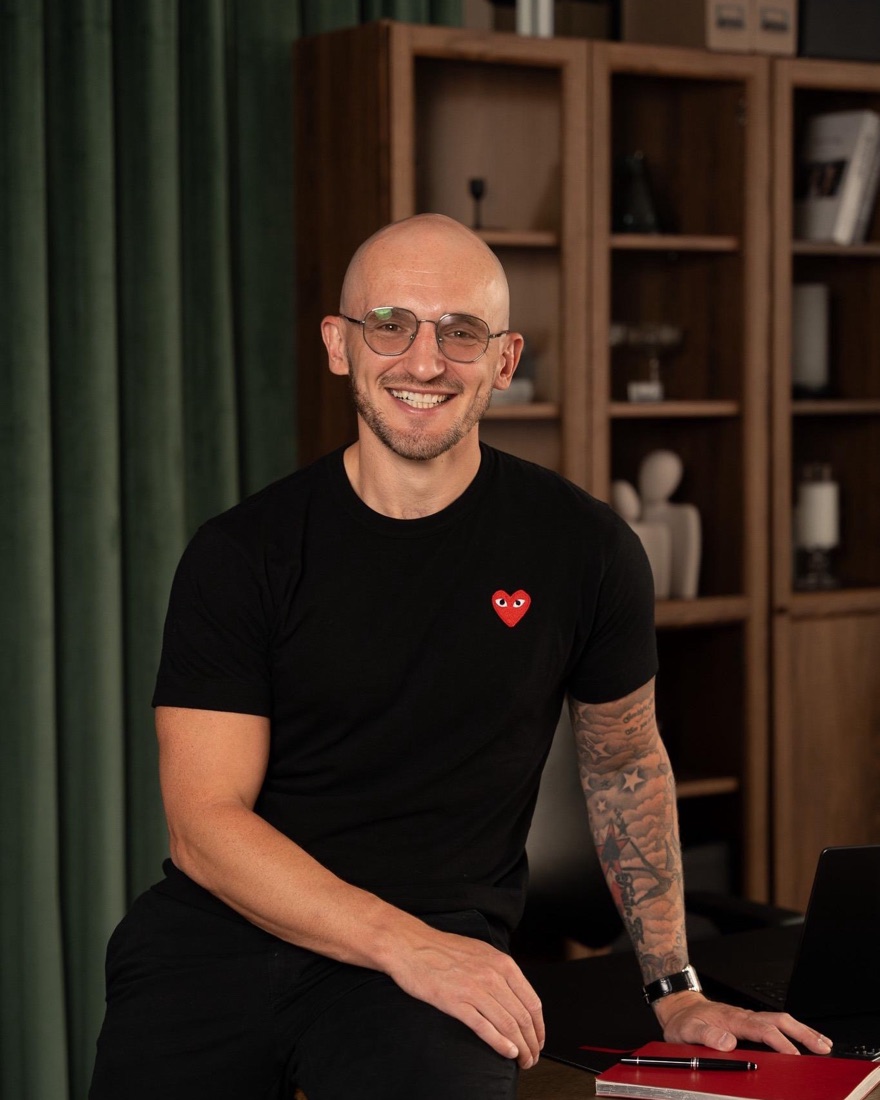
The opportunity nobody is teaching
Students who challenge AI output, verify it, argue with it and build on it outperform students who work without it.
Students who accept it uncritically fall behind.
Same tool. Opposite outcomes.
one has multiplied their thinking
one has outsourced their thinking
Fig. 01 · same tool, two outcomes, three years apart
The difference is not intelligence. It is not the school. It is a set of habits that can be taught in eight weeks, and currently almost nobody is teaching them.
66%
of parents say AI skills will be critical to their child's future.
11%
of schools teach AI at all.
The risk is not cheating
Every school newsletter this year has been about cheating. Cheating is the small problem. The real one is quieter.
84%
of high school students now use AI for their homework. If your child has a phone, assume they are one of them.
Stanford researchers found that students using AI tools often performed better on maths, writing and programming tasks. Better scores. Cleaner work. Fewer arguments at the kitchen table.
Then they took the tools away.
The gains largely disappeared.
The work was getting done. The learning was not happening. Researchers have a name for it: the illusion of mastery.
Three studies, one direction
Gerlich · Societies, 2025
Heavy AI use correlates with lower critical thinking, driven by cognitive offloading, the habit of letting something else do your thinking for you.
Younger users showed the highest dependence and the lowest scores.
MIT · Kosmyna et al.
preprint, not yet peer reviewed
Researchers wired people up to EEG while they wrote essays.
Those using an AI assistant showed measurably weaker neural connectivity than those using a search engine, or nothing at all.
International AI Safety Report, 2026
Doctors given AI support saw their unaided ability to spot tumours drop by six per cent.
Within three months. Trained specialists.
Your fourteen-year-old has been doing this since Year 7.
Gerlich, Societies, 2025 · Kosmyna et al., MIT (preprint, not yet peer reviewed) · International AI Safety Report 2026 · Stanford SCALE
You are in the right city at the right time
The UAE is the first country in the world to make AI a mandatory school subject. Dubai has committed to AI literacy for around 80,500 private school students through KHDA's partnership with DP World Foundation and MIT RAISE, running to 2030.
Your child is growing up in the place that decided this matters.
That rollout has not reached most classrooms yet. Dubai has told every parent in the emirate that this matters. It has not yet told them how to get it for their child.
01
AI will sit inside every job my sons will ever have.
02
The gap will not be who has the tools. It will be who kept thinking.
03
Taught the habits early, a teenager multiplies. Left alone, they outsource.
This programme exists to build the ones who multiply.
What Think First actually is
This is the same training companies pay me to run for their teams, rebuilt for teenagers. It is hands-on from the first hour, and every week they build. The tasks stack into one project they keep.
8
weeks
8
kids in the room
1 hr
live, every week
1:1
every fortnight
Think first. AI second.
01 · Think
What am I making? What does good look like?
02 · Brief
Context, constraints, a clear outcome.
03 · Judge
Keep what is right. Catch what is not.
The thinking happens before the tool opens. They get clear on what they are making and what good looks like, they brief it properly, and they judge what comes back. Clarity in. Judgement out.
Every child builds an AI sidekick of their own.
One build runs underneath all eight weeks. They name it, teach it who they are and what they care about, and keep its memory file themselves, so they learn that the machine only knows what you tell it.
Week by week it grows. A checked memory. A quiz mode. A face they designed. One real job it does every week. A set of rules they wrote and signed at home.
By week eight it is theirs: something they built, understand from the inside, and are proud to stand up and show.
Sidekick is my working name. In week two, they choose their own.
Their sidekick
they pick the namememory.md
Skills · added week by week
Built across eight weeks · shown at the showcase
Every week
01 · The live hour
Eight kids, one idea, worked through together.
Every week
02 · They build
The task. Another piece of their sidekick, built by them.
Every fortnight
03 · The 1:1 review
Twenty minutes with me. Progress reviewed, blockers cleared.
Doing is the whole method. Nobody sits and watches. Questions in between come straight to me by email.
Eight live sessions. One hour a week, all eight kids, worked through together.
Four one to ones. Twenty minutes with me every fortnight. Progress reviewed, blockers cleared.
Email support throughout. Questions between sessions come straight to me, parent or child. I am there.
The shared folder. Every session recording, plus the tools, prompts and guides we use, all in one Drive.
A walkthrough video with every task. A few minutes to help them think it through before they build.
The showcase. Week eight. They present their sidekick. You are in the room.
01
How the machine actually works.
What it is brilliant at, where it breaks, and why it sounds confident either way.
The taskOpen their sidekick's memory file and teach it ten things about themselves.
+ a memory
02
Clarity of thought.
Decide the outcome before the tool opens. What am I making? What does good look like?
The taskWrite their sidekick's job description, and give it its name.
+ a name and a job
03
Judgement.
How to check a claim. How to spot confident nonsense.
The taskPut its answers to the test on something they know inside out, then correct its memory.
+ a checked memory
04
Thinking partner, not answer machine.
Making it argue back, quiz them and coach them.
The taskTeach it a school topic, then get quizzed until they beat it.
+ a quiz mode
05
Making things.
Image and video. Something finished.
The taskGive their sidekick a face, made with the tools.
+ a face
06
Real work.
Multi-step tasks and automation.
The taskTheir sidekick takes on one real weekly job, and keeps it.
+ a real job
07
The line.
Cheating, deepfakes, bias, privacy. They write their own code of conduct.
The taskTheir sidekick gets its rules: what it will never do, signed at home.
+ its rules
08
Showcase.
They present their sidekick and everything they built. You are in the room.
The taskStand up. Show their work.
the reveal
By week eight
What they walk away with.
They know what they are making before they open the tool.
They catch it when it is confidently wrong.
They brief it like a pro: context, constraints, a clear outcome.
They check claims instead of repeating them.
They have made images and video, and automated a real job.
They have built, named and taught an AI sidekick, and presented it to a room.
Who is running this
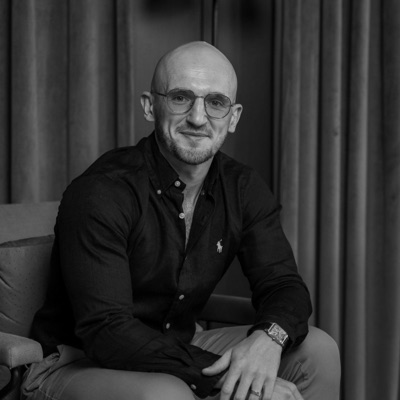
A note from Adam
I am not a teacher.
I am a founder, fifteen years now. Most of my week goes on one thing: getting teams ready for AI. I build them, hire for them and train them, I run AI workshops inside companies, and I have rebuilt my own business around these tools, my own team trained through the change.
Developing people is the part I have actually been trained for. I am an EMCC accredited coach, and I have spent fifteen years doing it with founders and leadership teams.
I built this for my own son first.
I watched what he could do after a few months of us working through it together, and I watched the way he started catching the thing out when it was wrong. That is when I knew it was teachable, and that most kids were never going to be taught it.
Companies pay me to build exactly these habits in their teams. Think First is that work, rebuilt for your child, and honestly, it is the most fun I have with any of it.
I am opening eight seats.

Founder for fifteen years, across UK, US and UAE
Builds, hires and trains teams for AI, in his own companies and his clients'
EMCC Global accredited coach, Practitioner level
Rugby coach, Dubai Exiles
How it works, and how your child is kept safe
Your child uses ChatGPT on a teen account linked to yours, with parental controls on. We walk you through the setup before week one. Nothing happens on a tool they are not permitted to use, and thirteen is a hard floor because that is the minimum age for a teen account.
Sessions are recorded so nobody falls behind. We record the teaching only. Adam's screen and voice. No children on camera.
The one to ones are recorded too, and you are welcome to sit in on any of them. Everything happens in the open. All communication runs through you, by email, so you always see the whole picture.
Live on Google Meet. Small enough that everyone speaks every week.
Consent forms covering recording and data handling come to you before week one, and nothing involving your child is published without your written permission. My own son has a veto on anything he appears in. So does yours.
Founding cohort. Eight seats. AED 2,950.
That is the full eight weeks: all eight live group sessions, four twenty-minute one to ones with your child, email support from me throughout, session recordings, and the showcase.
AED 2,950 is the launch price for this first cohort. The founding eight keep it on every programme they ever do with us.
Apply for a seatApplying costs nothing and commits you to nothing. Nothing is payable until we have spoken and you have a seat.
What comes next
Think First is the first rung. For the kids who want to keep going, this is where it leads.
Operator
This cohort
Eight weeks. Uses the tools well. Thinks first.
Builder
Coming next
Makes things. Automations, agents, small working products.
Founder
Further out
Ships something real, with users.
Everything after Operator is built on thinking first, and the founding eight keep founding pricing on all of it. You do not have to decide any of that today.
The questions you are actually asking
Apply for one of the eight seats.
Three minutes. I read every application myself and reply within 48 hours, whether it is a yes or not. If we both say yes, we have a short call and then you have a seat. Applying costs nothing and commits you to nothing.
Applications close 26 August. This cohort starts September.
PS,
I am not trying to keep your child away from this. I use it every day and I think it is the most useful thing to arrive in my working life. I am trying to make sure they are the one using it, and not the other way round.
I watched my own son go from taking its word to catching it out, and it changed what I think kids are capable of with this. Eight of them in a room, learning to think first. I cannot wait to teach it.
Adam Callow · Dubai